We see a large number of $502M and the term “virtual.” But what is Improbable and why would a city-state’s sovereign wealth fund invest?
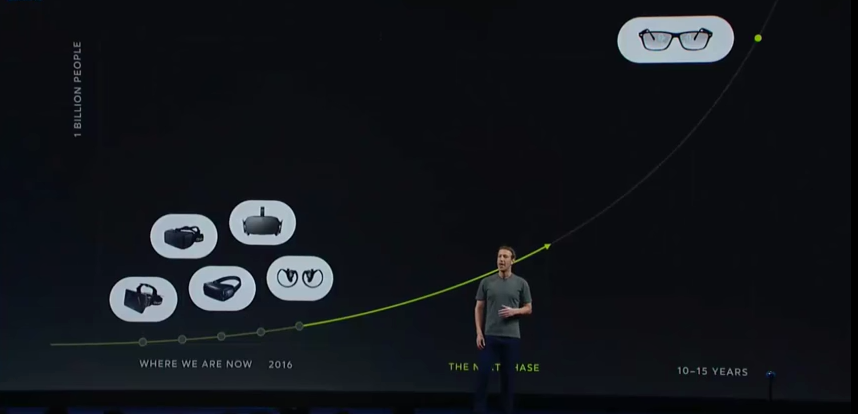
“We believe that the next major phase in computing will be the emergence of large-scale virtual worlds which enrich human experience and change how we understand the real world. At Improbable we have spent the last few years building the foundational infrastructure for this vision,” – Improbable Founder, Narula
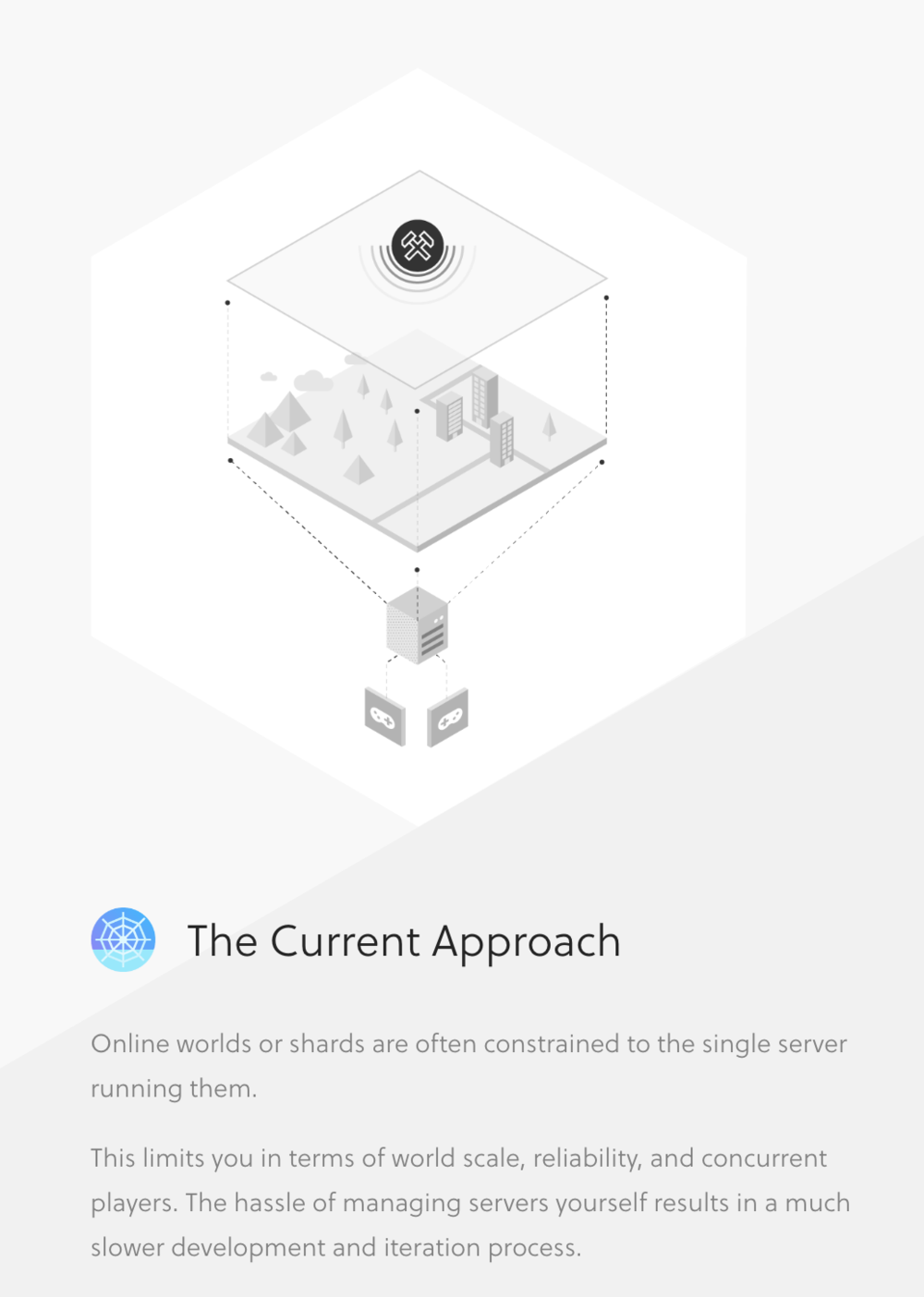
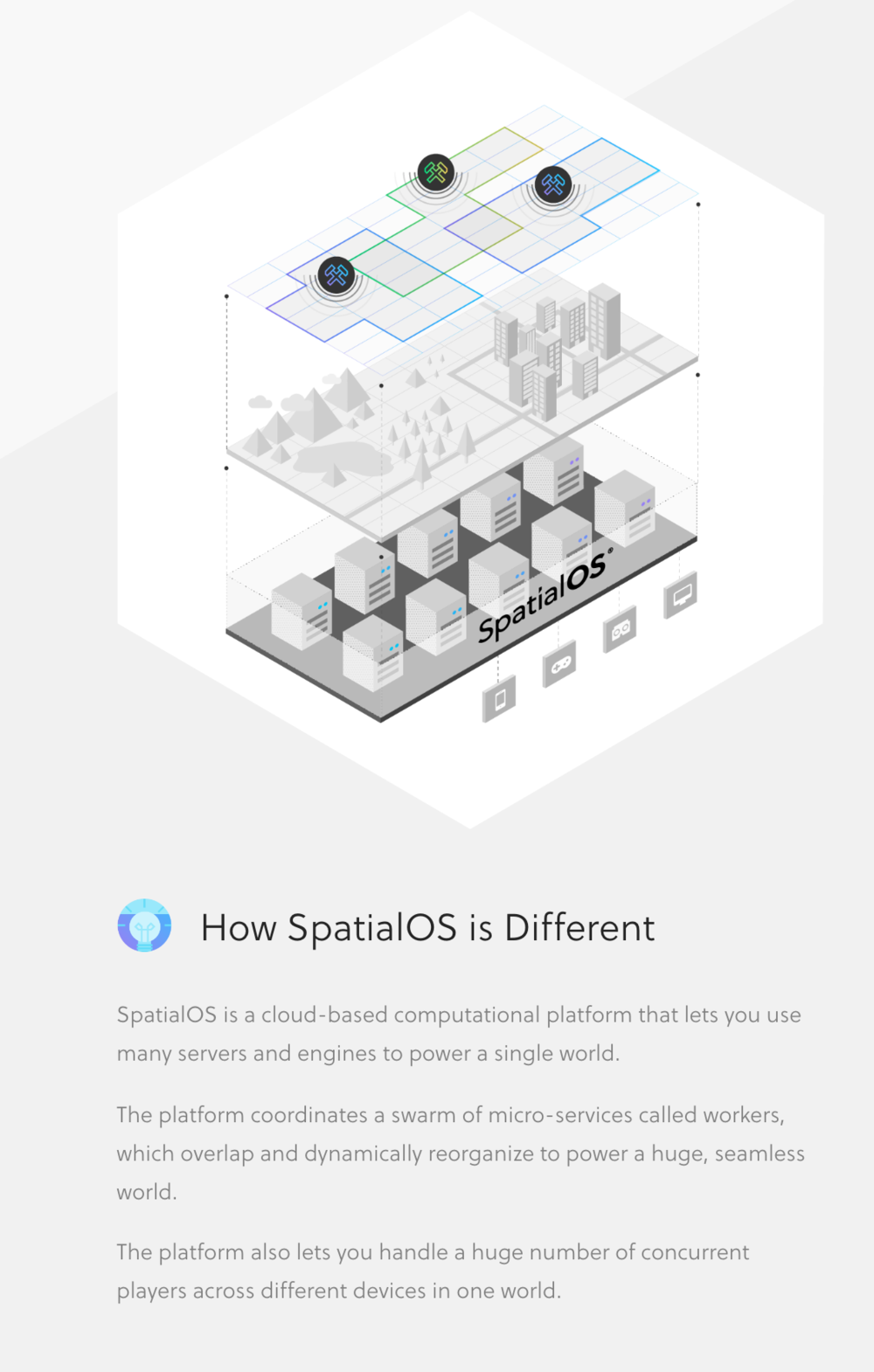
Improbable has what they call “SpatialOS” a distributed operating system that runs in the cloud – to build virtual worlds and massive simulations.
“The next step:
Large scale simulation as a way of solving problems.”
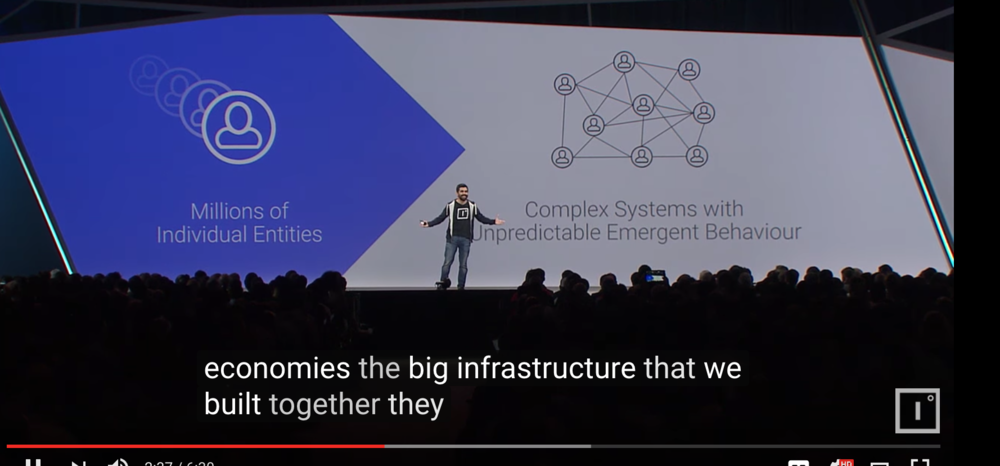
Emergent systems – the idea that our world, the cells in our bodies, the economy, the big infrastructure that we build together. They all represent millions of complex emergent systems.
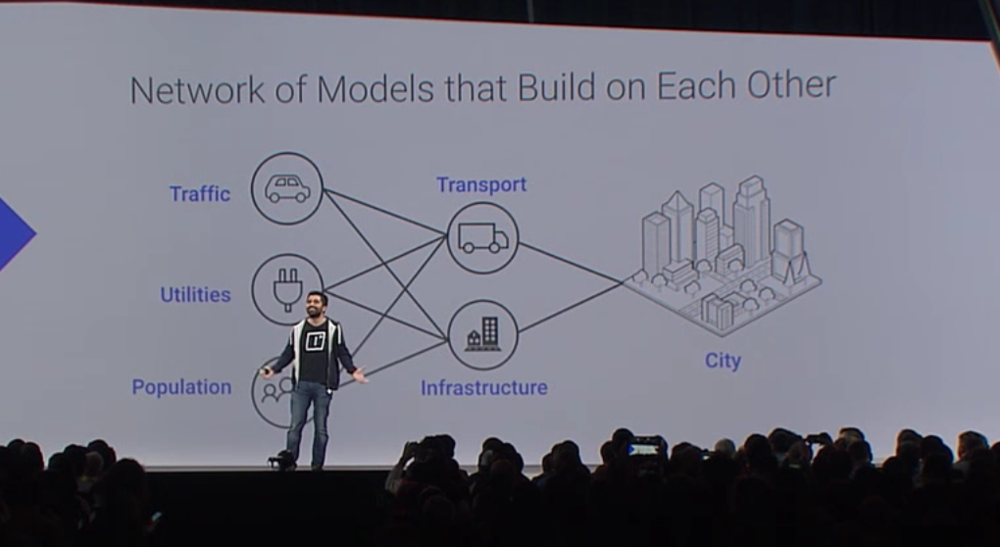
If we really want to understand these systems, we have to go a lot further than using machine learning and past data – we need to learn to completely recreate these systems in their entirety. – actually replicating entire cities on massive simulations building models of these networks that have never been possible before.” “Need to build new kinds of semi parallel systems that can make this stuff work.” “Need devs to: build new businesses and services that run on this”
Application
“Improbable is exploring applications in:
city management
telecommunications
infrastructure and logistics,
cybersecurity,
transportation and traffic control
running autonomous vehicles.
the Internet of Things,
“has also seen interest in
medical applications,
economic modelling
and many other use cases.
Proofs of concept and pilot projects
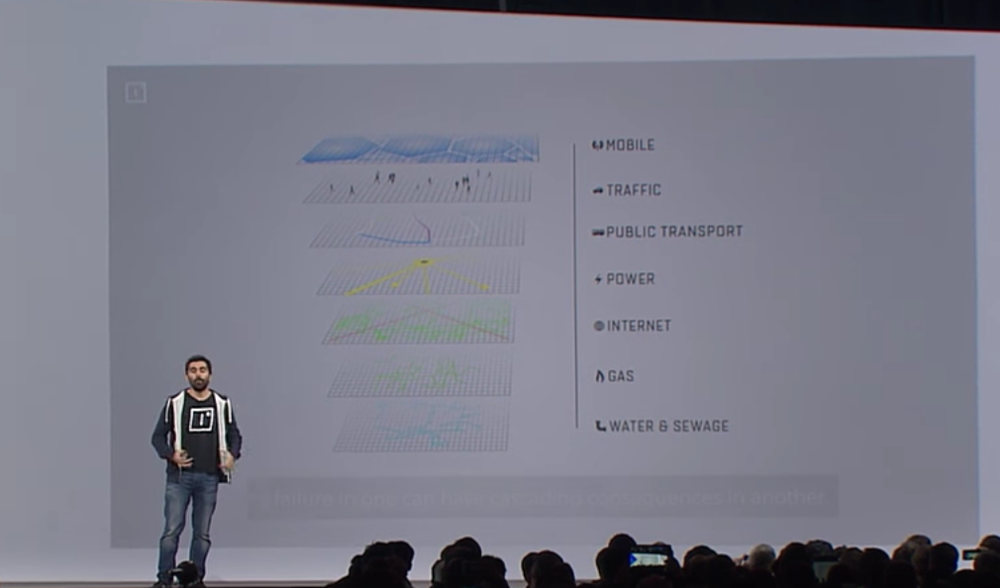
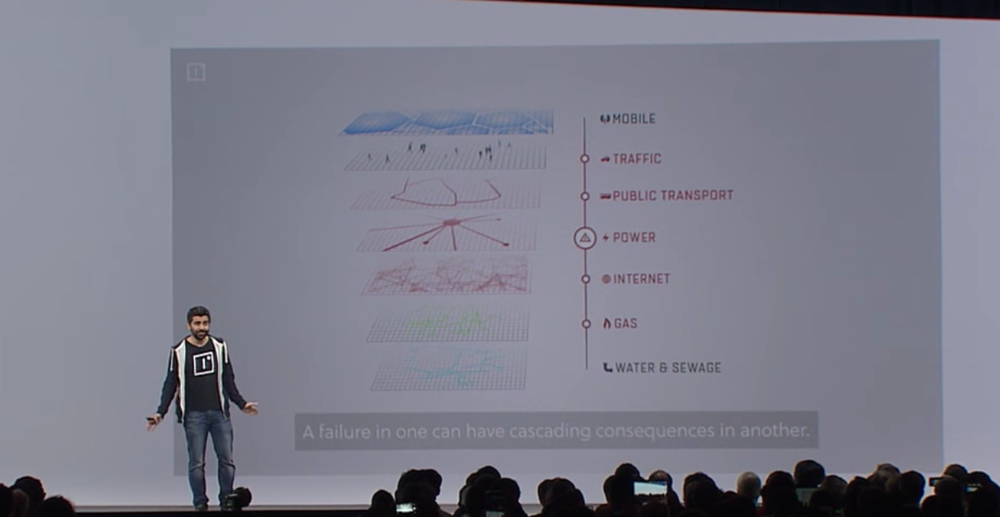
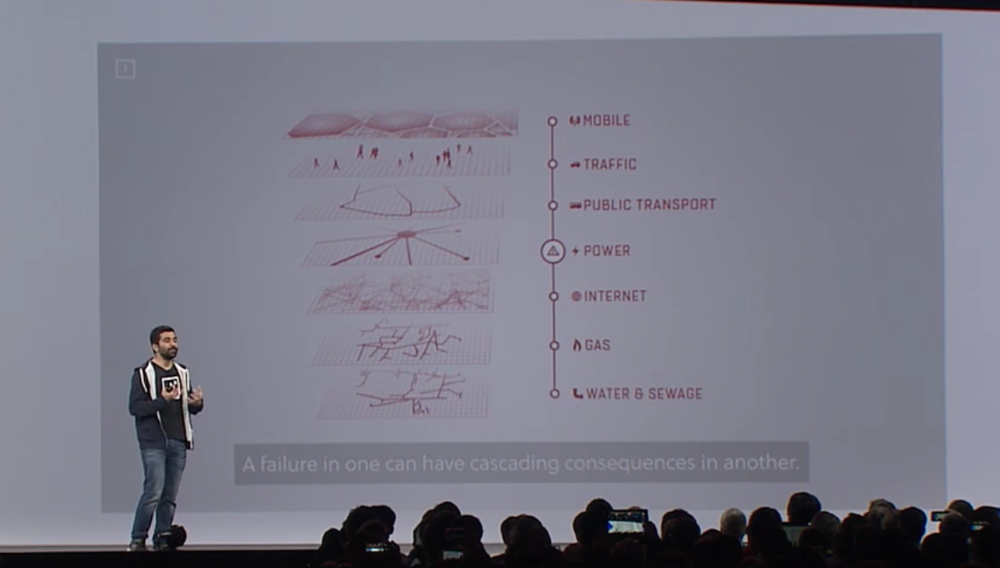
Simulation of a UK city, with all of its infrastructure and services – making the backbone of that city
based on:
open-source map
traffic
gas and electricity
water and sewage
Internet and mobile connectivity data).”
When including the flow of natural resources, machine and human movement across the environment – this simulation is better described as a city’s nervous system. It is not just a simulation limited to representing the physical infrastructure, and communications networks. It is a model of how we as people behave with and within those systems.
Could this be used to simulate evacuation plans? Responses to nuclear disaster or infectious disease? (This shows why Singapore’s sovereign wealth fund invested.)
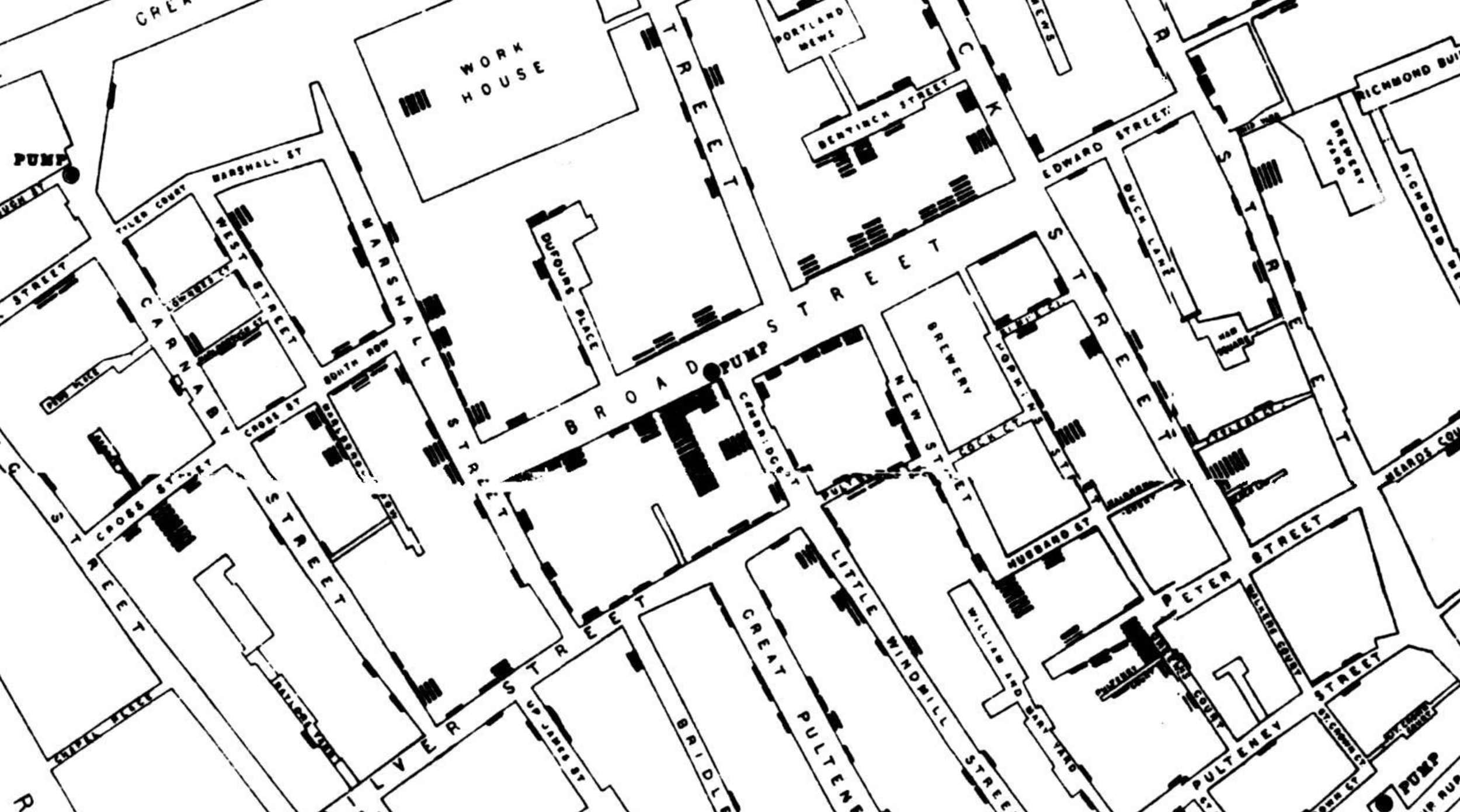
A crop of the original map by John Snow showing the clusters of cholera cases in the London epidemic of 1854, drawn and lithographed by Chalres Cheffins.
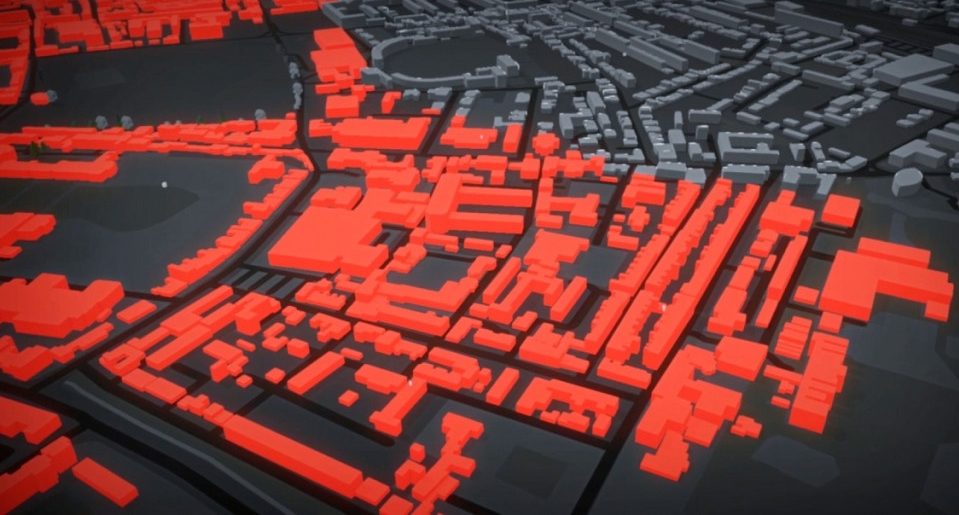
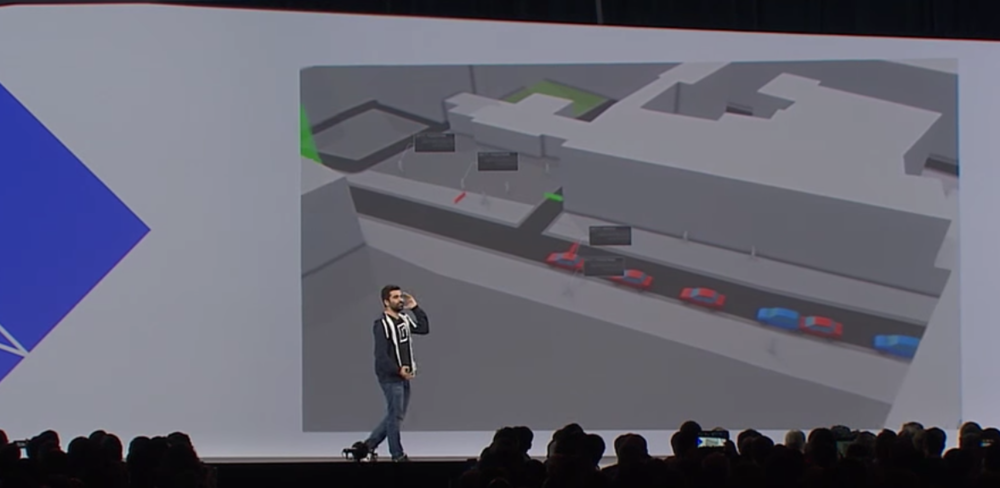
A snippet of an environment that SpatialOS can simulate. Modeled on a British city.
I think because they can make persistent worlds. We can run them full time and explore infinite permutations of scenarios.
“The cloud is not going to be a zero sum game nor a closed ecosystem”
“Runs on Unity for visualization and interaction with the simulation.” “This is the future for how we’re going to look at how all of the systems that are in our world operate. Not just looking at past data.”
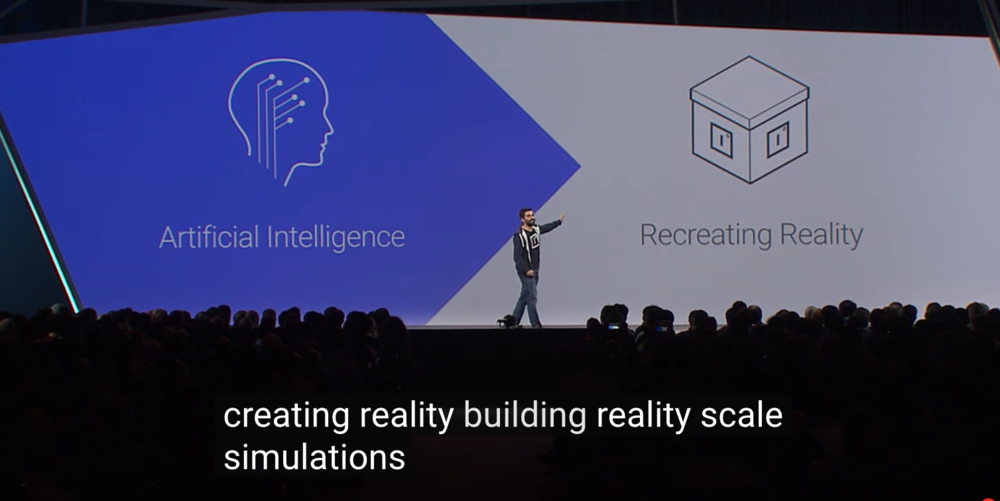
“Building reality scale simulations.”
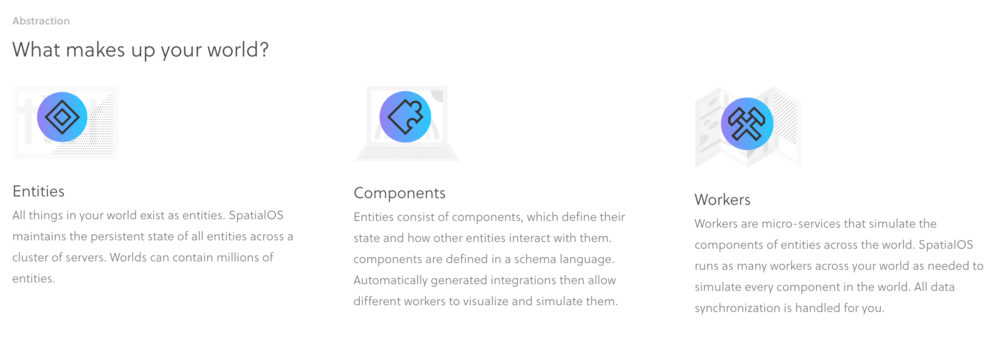
Note to Self on the System’s Abstraction: SpatialOS Runs on an entitycomponent system like A-Frame. But then they also have workers. SpatialOS might not run with Unreal, but there are Unreal simulations from GDC that use Improbable.
– recipient of unnatural “Social Innovator” fellowship resulting in residency at Eileen Fisher in partnership w Council of Fashion Designers of America (CFDA)
Nelsoj De Jesus Ubri / BFA
audience question:
how do i make sure that I am achieving enough every day.
Sophia Sunwoo quotes Tony Robbins:
“You over estimate what you can accomplish in a year. But you underestimate what you can accomplish in 10 years”
the common theme:
Not set deadlines but a non-linear organic process
Towers highlights a pattern among the panelists:
“What I hear you are saying
how you approach to complexity – one step at a time …as you have to in order to solve wicked problems “
– Joel Towers – Dean of Parsons
“you you don’t know the top until you’ve seen the bottom and worked our way up”
– Kay’s dad
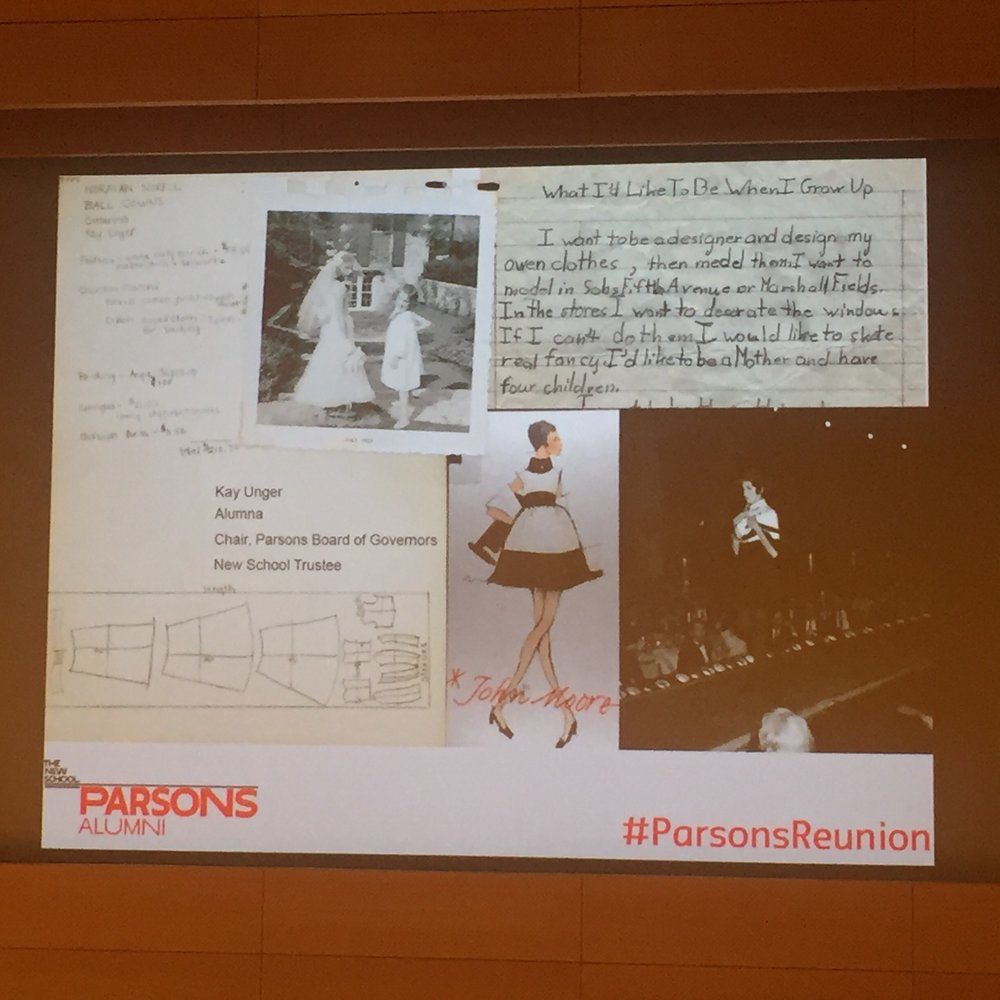
wrote a letter when she was 8 years old
built 125M business – had it all stolen by partner
fashion designer and entrepreneur
traveled 39/40 years – every show – made sure to give back money
everyday I am going back to school
So often the arts are forgotten –
and that’s how a lot of us learn
we learn differently
When I saw the space – not only in technology but in changing the futre
But with regards to hospitals [and other human contexts] is what we are teaching
A letter Kay wrote when she was 8 years old stating she wants to be a fashion designer
Tor of the new Making center
Jacquard
27,000 sq ft out of a larger 80,000 sq ft in downtown Manhattan dedicated to making.
part of process focused on “redesigning the design school”
3D printers of all kinds FDM and STL
Printing set ups for screen printing with washing stations, lithographaohy etc.
– this is where Jeff Staple started – but upgraded
Jacquard
3D knitting machine – like the ones used to make Nike Flyknits – coming soon
No luddiets allowed
Great to see how parts of the university change so often and so dramatically.
This constantly change may be driven by New York or as Dave Marin thinks – that in this field of creativity you constantly have to be reinventing yourself.
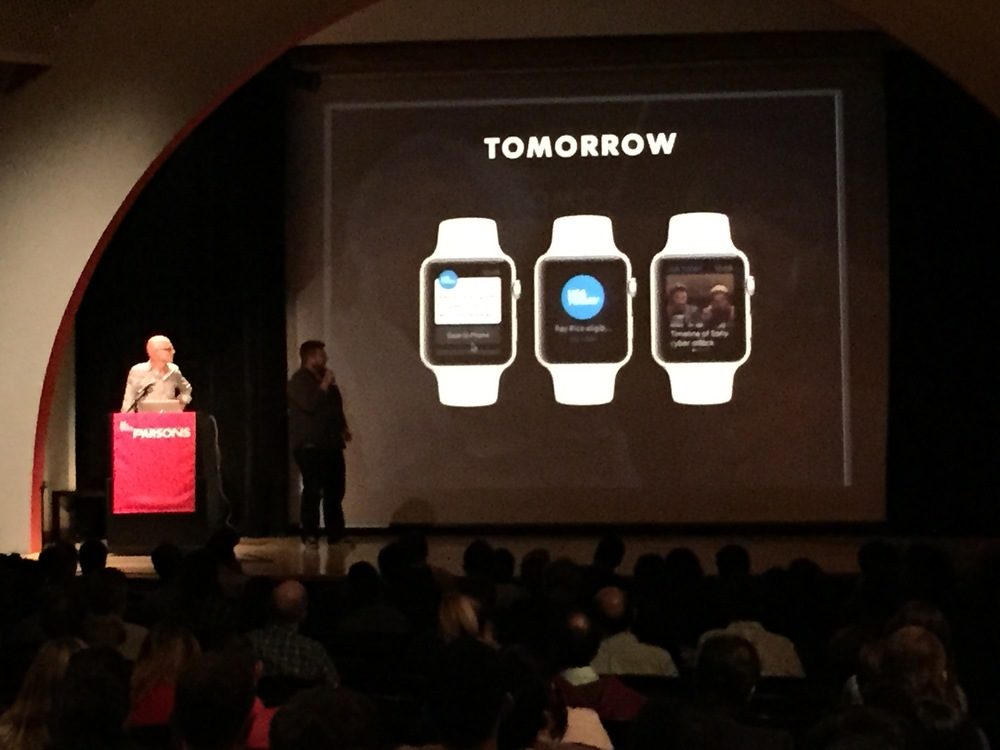
New York City is full of events on digital design and UX. What is unique about this event is how a university accepted members of the business community like First Mark Capital into the mix. There was a time shortly after the recession when The New School, the university with the highest number of US Communist Party members, would not tolerate venture capital in conjunction with university activities. As the economy improved the open-minded nature of the university has prevailed.Learn how a public company, a start-up, and a fashion ecommerce brand are driven by design. Get insight into the new model behind a design studio.
Notes:
USA TODAY Resdesign
Work w Fantasy Interactive A separate code base for each platform – only the homepage is responsive
– gave a preview of their yet to debut mobile platforms
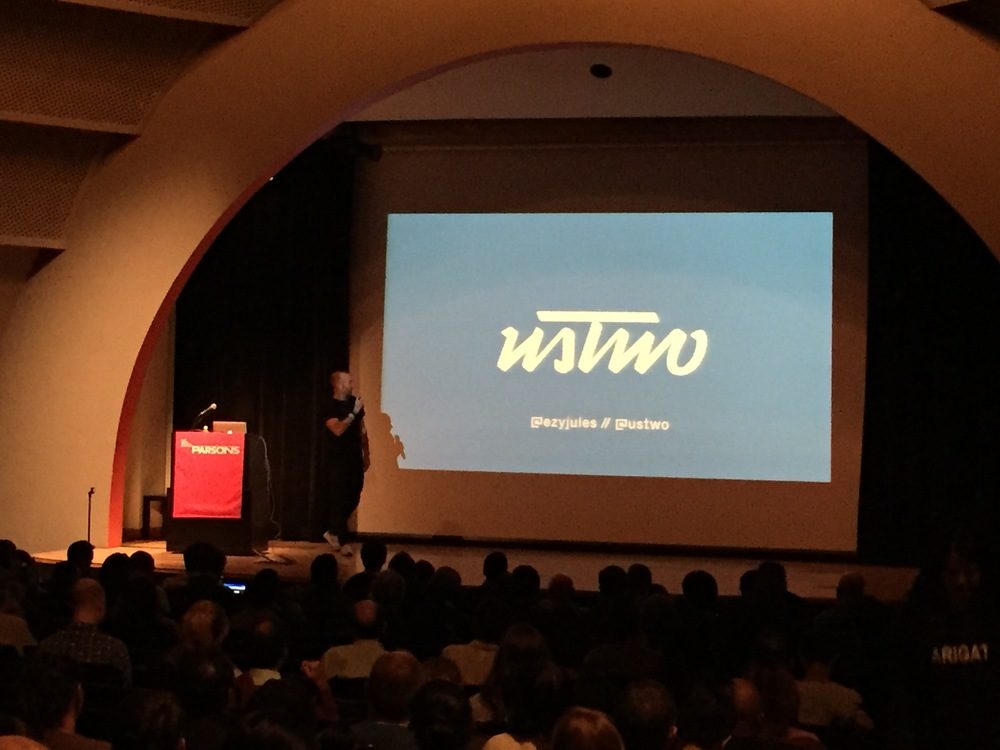
UsTwo
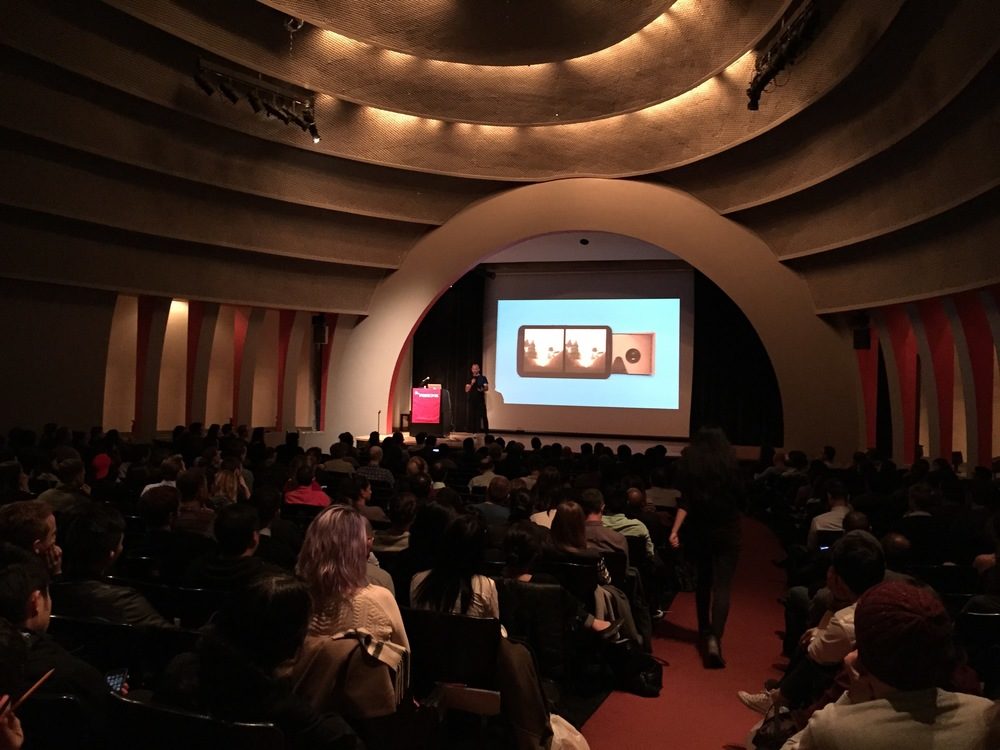
A digital product studio – we measure ourselves by the work we put in the world – We don’t do ads we don’t do campaigns Google Android watch Google Cardboard Monument Valley – created in Unity – could not be created in a traditional game studio – the brief was not to make money, it was to become the Apple mobile game of the year – ~ 6 game concepts were put up – prototyped to Monument Valley 8 person team, 10-12 mo, $ 800,000-1M, $10M sales
[everyone is] Focused on unicorns Designers’ delusion – because we’re designers we believe we can disrupt industries – Our approach and strategy is to find allies that know the industry
The opportunity – – seen management consultancies acquire design studios, (McKinzee, Accenture, …even TD Bank) – Facebook acquired Hot Studio We feel this is a threat to the design industry The talent is being pulled into large institutions, large tech companies
We started by borrowing 5,000£ to start UsTwo Ship of Thesus – Plutarch – expects a resurgence in independent studios – it’s hard to maintain what you started when you sell – the end of the consultancy …were not facing the end of the consultancy were facing consolidation … Consultancies are hedging risk.
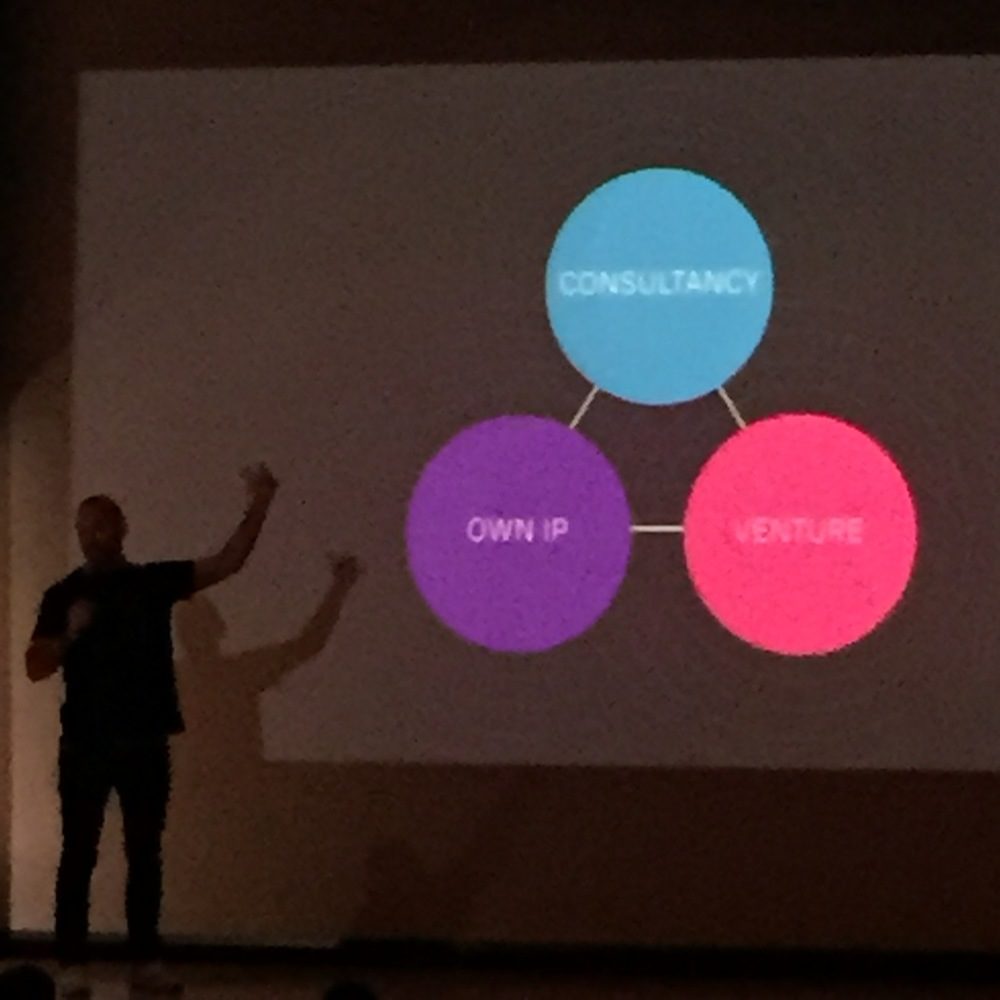
The UsTwo model by co-founder Jules Ehrhardt
The opportunities Amazing times Tragedy that extremely talented people spend time making things that don’t matter …that don’t help people Don’t build a bigger hamster wheel…build a rocket ship.🚀 If you do consultancy right You earn enough money to build your own stuff (IP) The real real real opportunity is around venture
Us As designers sand engineers – a really fine set of skills – trade this ability, not necessarily to get paid, not necessarily to build your own stuff but for equity. Do deals in return for equity by launching other people’s companies to market
Change the game people are playing You need to build enough capital for venture work
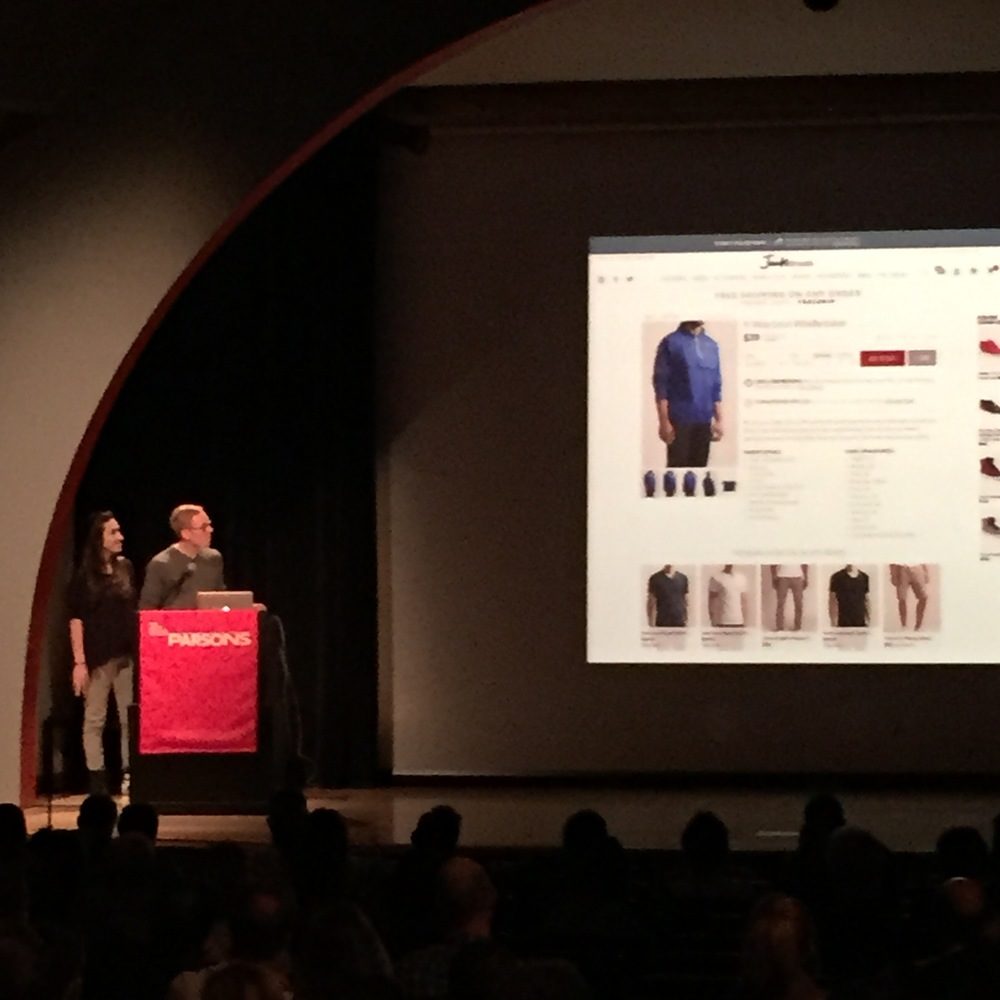
On UX for ecommerce some simple, commonplace rules Cropping models heads’ off makes the image more mysterious and higher click thru Full modal overlay for email sign up makes people think that they have to sign up to access the site
Good, simple new thoughts in moving from a flash sale site model to a brand site such as “two way responsive (w and h), “elastic scroll”
Design Driven NYC
Tuesday, Oct 20 | 6:00 pm–9:00 pm
The Auditorium at 66 W. 12th Street, Ground floor
Parsons School of Design is proud to partner with FirstMark, an early-stage venture capital firm, for four exciting events during the Fall 2015 semester.
Design Driven is the largest design community in NYC offering monthly events with talks from top-tier creative leaders from emerging and established companies.
This month’s speakers are:
Talia Fisher and Ben Gelinas, Lead UX Designer and Creative Director at JackThreads (formerly part of Thrillist Media Group)
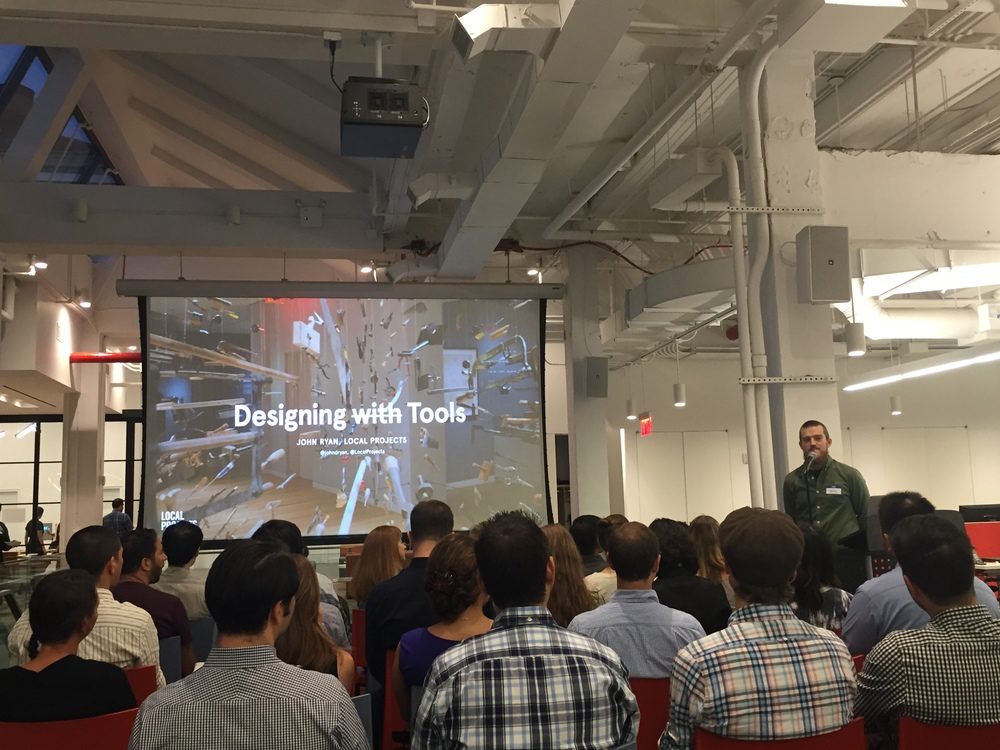
We engage in tool making – the lens of this presentation
The most successful design in history – Andalusian hand axe – when measured by project life cycle
“The most significant step that ever was taken in human history, the thing that …”
The things we make … what we leave behind… the way that puts design as one of the oldest disciplines as humans
went beyond functional – social expression, cultural – people got attached to them,
in a way they captured the human desire to express, embed ourselves in our surroundings, change objects around us
we picked up the piece of charcoal afterwards – we started scwaling on the wall we embed narratieve – “THE UNIVERSE IS MADE OF STORES, NOT ATOMS”
TOOLS – Invited self expression tools invite people to create their own experiences – to make their own meaning.
—- Cleveland Museum of Art
keen to leave space for visitors own experiences
simple tools design to amplify the experience of being in the gallery – not to take you somewhere else – you could totally ignore it or engage w/ it – the successful ones built on self expression
Self expression – facial recognition to showcase artwork making the same face as you gets at the heart of portraiture – the ability to engage remotely and abstractly
Gesture recognition – figurative sculpture making the pose key to what art is trying to say allow visitors to connect w/ it a simple game = select a sculpture, try and imitate it – rated on performance people of all ages connected w/ it in a new way to look t the wok
central piece – wall collection of 3k artworks tool for connecting w/ the size of the collection and engaging w/ the curatorial collection / method browse the artworks, save those that interest you. a platform to make your own experience
—
Tools Elegance candor and purity – American photographer Walter Evans – summed up common tools a lot of us are obsessed w/ our tools “what’s the latest tool that’s going to save my project?” tools have that explicit in their form and their design
Bret Victor “tool – that which address human needs by amplifying human capabilities”
Prehistoric man – need to eat, sharpened rock, spear – leverage our abilities this primitive task – is at the core of our design process take what ppl need to do, amplify what they can do make the impossible possible
—
Great tool are designed to fit both the capability and the need The person and the problem (handle hammer head)
a lot of ppl wanna use technology for technology sake we want to make it disappear so it feels like you are just using your own capability you forget the hammer is there, it becomes an extension of you optimize for both parts – and in a way cause it to feel natural and disappear amplify capabilities in a seamless way
Cooper Hewitt National Design Museum
1 come up w/ a visitor technology that emphasized play we weere collectively thinking about this need set an expectation for the visitor that they are here to design, here to make, not just consume? what tool could we equip them with based on their capabilities
The Pen learn about design by designing, themselves the whole experience was built around this one tool bookmarking system, stylus, antenna to store info ppls desire & ability to create = amplifies it puts you in the middle of the design process
arrive @ museum – get pen & ticket – collect inspiration w/ pens’ RFID reader as you move around the museum – touch down on LCD table and all of you info spills out – explore central river of insertion on table – explore any artifact w/ one line and see where it connects – k
also a tool for making inspiried by the collector around you, then design your own w/ the pen use the pen to save it
I think they’re moving towards bien gamble to create your own design by printing it in 3d
2 What happens if visitors get so caught up in what they’re doing, they want to draw all over the wall created the Massive wall paper room see in context,on the wall , not just on the screen create a pattern, move it, transform it became the ultimate selfie station – wall paper Wednesdays when the museum reposts people’ selfies
based on the need and ability everyone has – taking it and amplifying it
Museums Education & Storytelling as what they want to do factory model of education rote memorization, kids remember and are forced to repeat
activity based learning is the best way to get ppl to learn and remember
[Confucius Quote]
We make tools and innovational experiences bc we as humans – this is how we understand things
tools invite self expression..
NY hall of science digital noticing tools for math & science didn’t want an overly didactic experience tools so children could explore math and scion around them programs @ the museum that do it in a really physical way encourage kids to make and play go thru that to create virtual set of tools in middle school classrooms
Series of app one – in physics lesson – bored, staring @ playground , their next spot during the break. but when they’re in the playground they’re enacting much of what they learned how could we create an app to allow children to discover and explore these things themselves, how we use hardware prototyping and iteration using physical hardware – matts of different materials – see how frictional forces we effected matts of diff material feedback to an iPad hardware difficult to scale – esp for a design stdio not building a product one designer quickly made a proof of concept – the phone is recording movement while moving & jumping around – visualized the data over the video built in more complexity a prototype that would talk – create network btw phone & video, -0 see dat underneath – xyz movement access, use computer vision (camera) to track & record the movement  
; instead of automatic video tracking (kids have eyes and are good at that) allow kids to trace the movement path move concept forward and simplified
This product made a brief appearance in Tim Cook’s latest Apple keynote
changed how the kids engaged
—— We shape our tools and thereafter our tools shape use – father john culkin / marshal mcluhan?
Sarah ____________ – [design inspiration] Skate boarders & wheelchair users hack the city & reshape the environment to make the city work better for themselves tools shape our understandings & perfections
—— Age of wearable devices & qualified self how we understand the world around us & how we understand ourselves feedback loop to understand ourselves and get in shape i don’t think we’ve quite yet understood how it’s going to play out
Tech museum of innovation in San Jose one exhibit at the core iPod touch that hung around their neck + brain monitor – skin galvanization – moisture reading move around the museum, amazing place for kids, physically you can see the feedback of the sensor on the device itself (and the artefact of the installation)
at the end of the visit, bring your devices to touch table your data comes flowing out of it the course of your visit, how you respond spending on what you were looking at, compare to those around you,
——
We’re all eager to put our hands on the technologies and potentials a necessary one – figure out what these tools mean for us this potential of augmenting ourselves and shifting how we know ourselves and the world around us
tools are intended to bring about change we continue to make and use them out of a deep human desire to go beyond our current abilities
get the technology out of the way so they can amplify they own voice take a desire or spark….bring this potential to life
facilitate learning, so by doing, we understand.
and they shape us, we shape our tools, and there after our tools shape us, the ways that we perceive and understand the world around us and ourselves
presented @ Cooper Hewitt side by side: hand axe & iPhone – majorly influential objects
the best tools allow us to embed ourselves in them, they become symbols of us, the hand axe becomes to something metaphorically that has our hand and the form that they choose to represent ourselves in
invite us all to create tools that allow ppl to embed themselves and express themselves
tools that allow us to move beyond our current limitations, to allow perspective to be changed, to allow users to do wonderful things to them
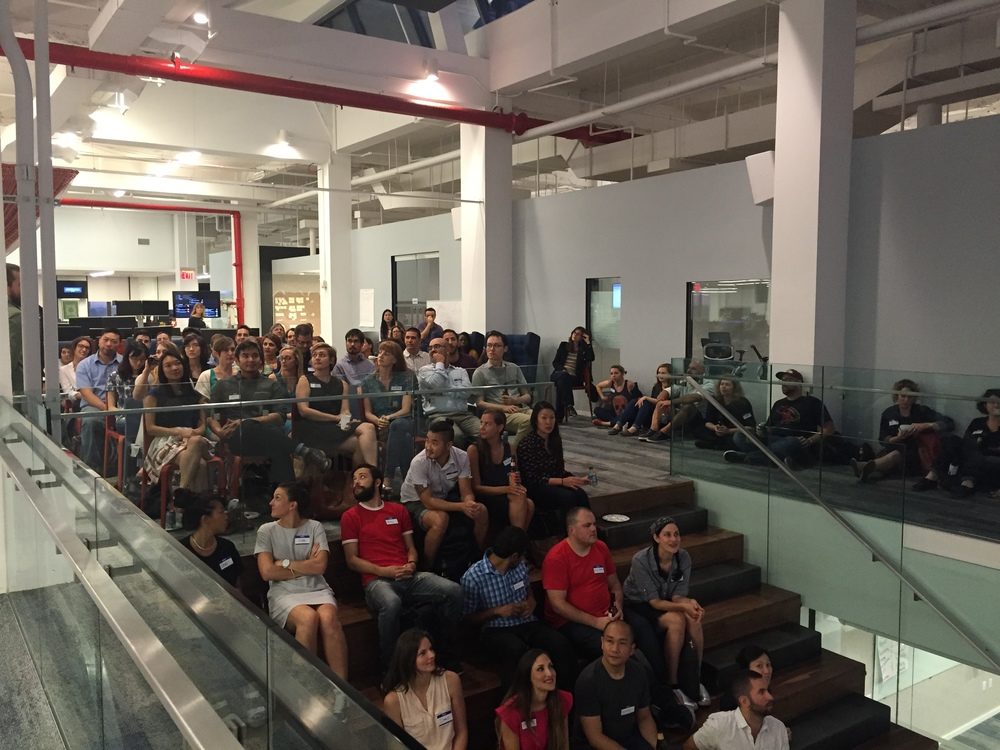
the full house at Yodle’s new office space
Questions Sustained engagement when you’re not creating a whole platform or whole service @ Cooper Hewitt >1/3 of visitors returning online to check their visit
User testing early and to as full of a prototype as we can when we don’t do it, it usually bites us later
Long term maintenance of these types of experiences – on going support w/ most institutions a lot of back and forth w/ their internal IT department
ex; Museums of San Jose – experienced IT team so it’s usually a partnership btwn us and the client themselves
Diff w/ Local Projects – we don’t do many one off marketing experiences where it’s up for x hours, ours are up for years and years. ex: we can’t just use any screen off the shelf
How to Design Interactive Physical Experiences?
Event date: September 17, 2015 – 5:30pm – 7:30pm
Location: Yodle Headquarters 330 W 34th Street, 18th Floor New York, NY United States Groups: New York IxDA
Event description:
“Creating an immersive digital experience is a hard challenge that designers take on daily. However, there are select projects that go beyond the screen and bridge over to the physical realm. With breakthrough technologies within the Internet of Things (IoT) and brands reinvigorating their retail shopping experience and startups taking their brands offline (e.g. Warby Parker, Birchbox, Bonobos), there is an ever-present need to keep the customer engaged throughout both their digital and physical experiences. And find ways to make both experiences as seamless as possible.
Local Projects will be showcasing specific projects where the design challenge required immediate insights thoughtful planning along with flawless execution from both a research and design perspective.”
Get involved with IxDA IxDA NYC Local Project Thanks to the host Yodle
next IxDA event: October 1st or 2nd – Managing Chao