John Ryan of Local Projects
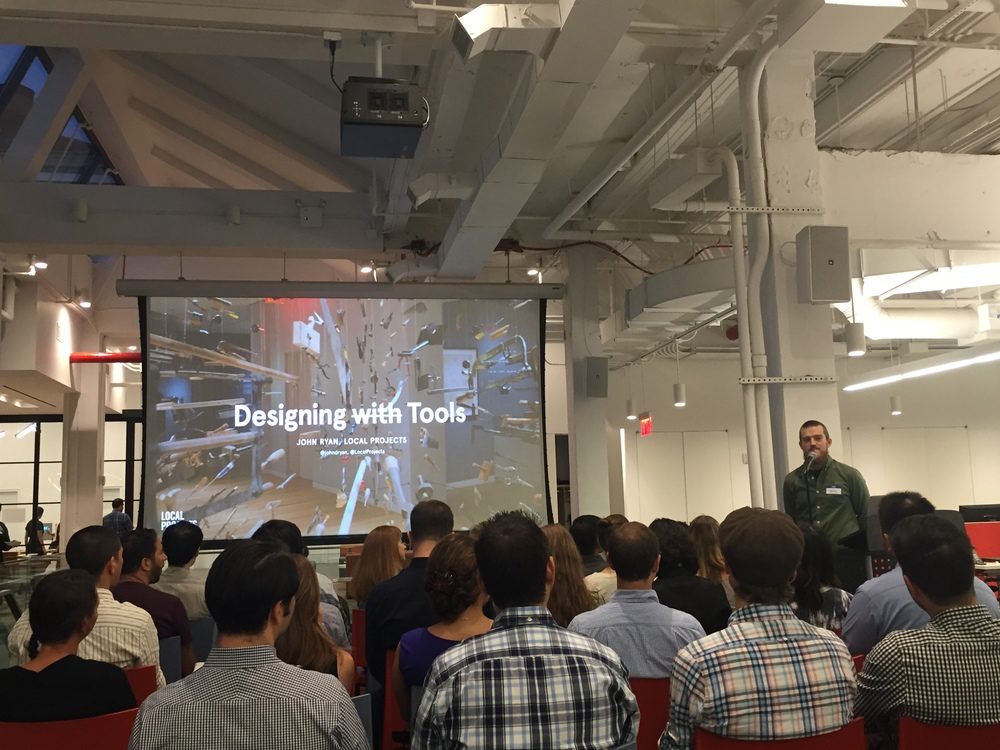
We engage in tool making
– the lens of this presentation
The most successful design in history
– Andalusian hand axe –
when measured by project life cycle
“The most significant step that ever was taken in human history, the thing that …”
The things we make … what we leave behind…
the way that puts design as one of the oldest disciplines as humans
went beyond functional – social expression, cultural – people got attached to them,
in a way they captured the human desire to express, embed ourselves in our surroundings, change objects around us
we picked up the piece of charcoal afterwards – we started scwaling on the wall
we embed narratieve – “THE UNIVERSE IS MADE OF STORES, NOT ATOMS”
TOOLS – Invited self expression
tools invite people to create their own experiences – to make their own meaning.
—-
Cleveland Museum of Art
keen to leave space for visitors own experiences
simple tools design to amplify the experience of being in the gallery
– not to take you somewhere else
– you could totally ignore it or engage w/ it
– the successful ones built on self expression
Self expression – facial recognition to showcase artwork making the same face as you
gets at the heart of portraiture – the ability to engage remotely and abstractly
Gesture recognition – figurative sculpture
making the pose key to what art is trying to say
allow visitors to connect w/ it
a simple game = select a sculpture, try and imitate it – rated on performance
people of all ages connected w/ it in a new way to look t the wok
central piece – wall collection of 3k artworks
tool for connecting w/ the size of the collection
and engaging w/ the curatorial collection / method
browse the artworks, save those that interest you.
a platform to make your own experience
—
Tools
Elegance candor and purity – American photographer Walter Evans – summed up common tools
a lot of us are obsessed w/ our tools
“what’s the latest tool that’s going to save my project?”
tools have that explicit in their form and their design
Bret Victor
“tool – that which address human needs by amplifying human capabilities”
Prehistoric man – need to eat, sharpened rock, spear – leverage our abilities
this primitive task – is at the core of our design process
take what ppl need to do, amplify what they can do
make the impossible possible
—
Great tool are designed to fit both the capability and the need
The person and the problem (handle hammer head)
a lot of ppl wanna use technology for technology sake
we want to make it disappear
so it feels like you are just using your own capability
you forget the hammer is there, it becomes an extension of you
optimize for both parts – and in a way cause it to feel natural and disappear
amplify capabilities in a seamless way
Cooper Hewitt National Design Museum
1
come up w/ a visitor technology that emphasized play
we weere collectively thinking about this need
set an expectation for the visitor that they are here to design, here to make, not just consume?
what tool could we equip them with based on their capabilities
The Pen
learn about design by designing, themselves
the whole experience was built around this one tool
bookmarking system, stylus, antenna to store info
ppls desire & ability to create = amplifies it
puts you in the middle of the design process
arrive @ museum – get pen & ticket – collect inspiration w/ pens’ RFID reader as you move around the museum – touch down on LCD table and all of you info spills out – explore central river of insertion on table – explore any artifact w/ one line and see where it connects – k
also a tool for making
inspiried by the collector around you, then design your own w/ the pen
use the pen to save it
I think they’re moving towards bien gamble to create your own design by printing it in 3d
2
What happens if visitors get so caught up in what they’re doing, they want to draw all over the wall
created the Massive wall paper room
see in context,on the wall , not just on the screen
create a pattern, move it, transform it
became the ultimate selfie station – wall paper Wednesdays when the museum reposts people’ selfies
based on the need and ability everyone has – taking it and amplifying it
Museums
Education & Storytelling as what they want to do
factory model of education
rote memorization, kids remember and are forced to repeat
activity based learning is the best way to get ppl to learn and remember
[Confucius Quote]
We make tools and innovational experiences bc we as humans – this is how we understand things
tools invite self expression..
NY hall of science
digital noticing tools for math & science
didn’t want an overly didactic experience
tools so children could explore math and scion around them
programs @ the museum that do it in a really physical way
encourage kids to make and play
go thru that to create virtual set of tools in middle school classrooms
Series of app
one – in physics lesson – bored, staring @ playground , their next spot during the break.
but when they’re in the playground they’re enacting much of what they learned
how could we create an app to allow children to discover and explore these things themselves,
how we use hardware
prototyping and iteration
using physical hardware – matts of different materials – see how frictional forces we effected
matts of diff material feedback to an iPad
hardware difficult to scale – esp for a design stdio not building a product
one designer quickly made a proof of concept – the phone is recording movement while moving & jumping around – visualized the data over the video
built in more complexity
a prototype that would talk – create network btw phone & video, -0 see dat underneath – xyz movement access,
use computer vision (camera) to track & record the movement
 
; instead of automatic video tracking (kids have eyes and are good at that)
allow kids to trace the movement path
move concept forward and simplified
This product made a brief appearance in Tim Cook’s latest Apple keynote
changed how the kids engaged
——
We shape our tools and thereafter our tools shape use – father john culkin / marshal mcluhan?
Sarah ____________ – [design inspiration]
Skate boarders & wheelchair users
hack the city & reshape the environment
to make the city work better for themselves
tools shape our understandings & perfections
——
Age of wearable devices & qualified self
how we understand the world around us & how we understand ourselves
feedback loop to understand ourselves and get in shape
i don’t think we’ve quite yet understood how it’s going to play out
Tech museum of innovation in San Jose
one exhibit at the core
iPod touch that hung around their neck
+ brain monitor – skin galvanization – moisture reading
move around the museum, amazing place for kids, physically you can see the feedback of the sensor on the device itself (and the artefact of the installation)
at the end of the visit, bring your devices to touch table your data comes flowing out of it
the course of your visit, how you respond spending on what you were looking at, compare to those around you,
——
We’re all eager to put our hands on the technologies and potentials
a necessary one – figure out what these tools mean for us
this potential of augmenting ourselves and shifting how we know ourselves and the world around us
tools are intended to bring about change
we continue to make and use them out of a deep human desire to go beyond our current abilities
get the technology out of the way so they can amplify they own voice
take a desire or spark….bring this potential to life
facilitate learning, so by doing, we understand.
and they shape us, we shape our tools, and there after our tools shape us, the ways that we perceive and understand the world around us and ourselves
presented @ Cooper Hewitt side by side: hand axe & iPhone – majorly influential objects
the best tools allow us to embed ourselves in them, they become symbols of us, the hand axe becomes to something metaphorically that has our hand and the form that they choose to represent ourselves in
invite us all to create tools that allow ppl to embed themselves and express themselves
tools that allow us to move beyond our current limitations, to allow perspective to be changed, to allow users to do wonderful things to them
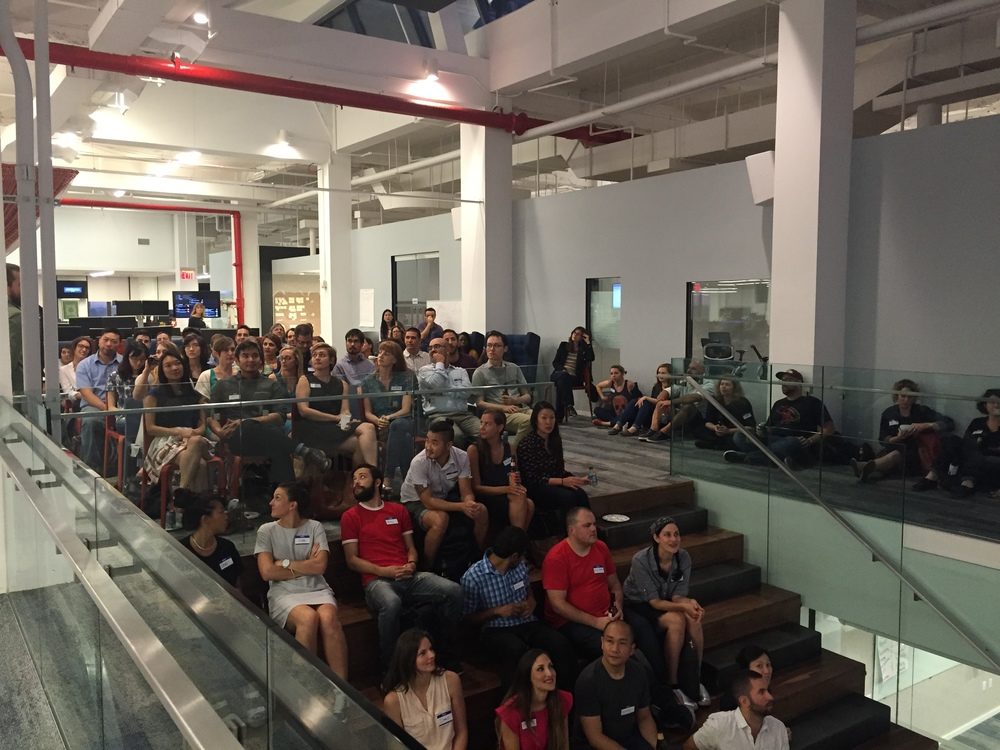
the full house at Yodle’s new office space
Questions
Sustained engagement when you’re not creating a whole platform or whole service
@ Cooper Hewitt >1/3 of visitors returning online to check their visit
User testing early
and to as full of a prototype as we can
when we don’t do it, it usually bites us later
Long term maintenance of these types of experiences
– on going support w/ most institutions
a lot of back and forth w/ their internal IT department
ex; Museums of San Jose – experienced IT team so it’s usually a partnership btwn us and the client themselves
Diff w/ Local Projects – we don’t do many one off marketing experiences where it’s up for x hours, ours are up for years and years. ex: we can’t just use any screen off the shelf
How to Design Interactive Physical Experiences?
Event date:
September 17, 2015 – 5:30pm – 7:30pm
Location: Yodle Headquarters
330 W 34th Street, 18th Floor
New York, NY
United States
Groups: New York IxDA
Event description:
“Creating an immersive digital experience is a hard challenge that designers take on daily. However, there are select projects that go beyond the screen and bridge over to the physical realm. With breakthrough technologies within the Internet of Things (IoT) and brands reinvigorating their retail shopping experience and startups taking their brands offline (e.g. Warby Parker, Birchbox, Bonobos), there is an ever-present need to keep the customer engaged throughout both their digital and physical experiences. And find ways to make both experiences as seamless as possible.
Local Projects will be showcasing specific projects where the design challenge required immediate insights thoughtful planning along with flawless execution from both a research and design perspective.”
Get involved with IxDA
IxDA NYC
Local Project
Thanks to the host Yodle
next IxDA event: October 1st or 2nd – Managing Chao